Polyurea Roof Coating for Commercial & Industrial Roofs
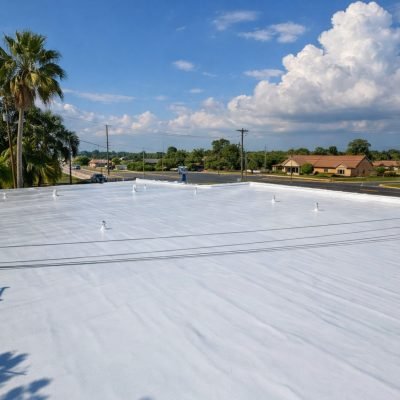
AZ Coatings provides high-performance polyurea roof coating systems designed to restore and protect commercial flat roofs. Our seamless coating creates a durable waterproof membrane that extends the life of your existing roof without the cost and disruption of a full replacement. For warehouses, factories, and commercial facilities, polyurea offers a faster, more cost-effective way to protect your building.
Why Owners Property
Choose Polyurea Coatings

Seamless Waterproof Protection
Creates a continuous membrane that eliminates vulnerable seams and joints.

Exceptional Durability
Highly resistant to impact, heavy use, and harsh weather conditions.

Cost-Effective Roof Restoration
Extend the life of your roof without the expense of a full replacement.

Rapid Cure Time
Polyurea cures within seconds, allowing projects to be completed quickly.

UV & Chemical Resistance
Protects roofs from sunlight, environmental contaminants, and chemical exposure.

Energy Efficiency
Reflective properties help reduce roof surface temperatures and energy costs.
What Is Polyurea Roof Coating?
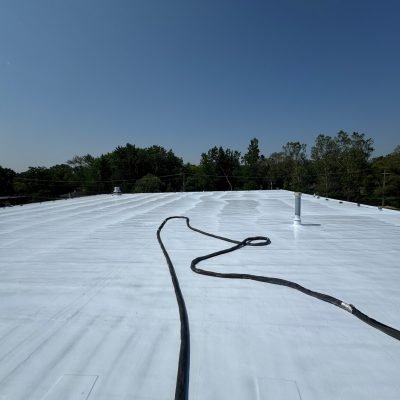
Polyurea is a high-performance liquid coating that is spray-applied directly onto a roof surface. Once applied, it cures within seconds to form a seamless, flexible membrane that bonds tightly to the existing roof.
Built for Demanding Commercial Environments
Polyurea coatings are ideal for buildings that require reliable, long-lasting roof protection.
Warehouses & Distribution Centers
Manufacturing Facilities
Durable protection against chemicals, abrasion, and heavy equipment.
Fleet & Truck Garages
Prevents condensation, rust, and corrosion.
Food Processing & Chemical Plants
Long-Term Protection
With Minimal Maintenance
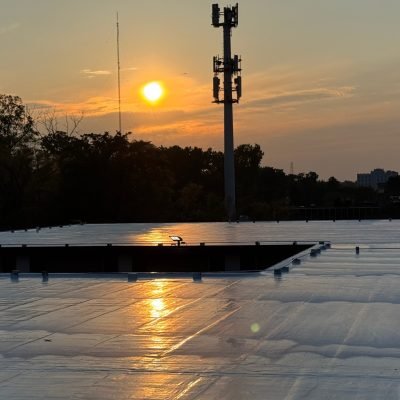
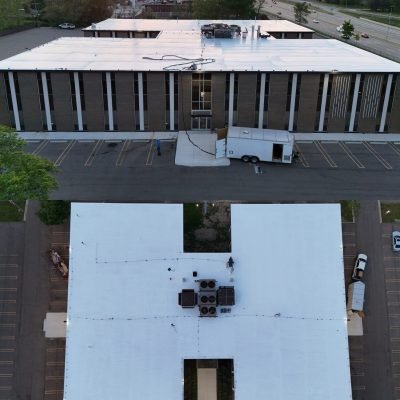
Polyurea roof systems are designed to be long-lasting and renewable. With periodic inspections and recoating when necessary, these systems can continue protecting commercial roofs for decades while reducing maintenance costs.
How to Restore a Commercial Flat Roof
- 1.Inspection & Assessment
Our team evaluates your existing roof condition, identifies damage, and determines if restoration is viable. - 2.Surface Preparation
We clean, repair, and prime the roof substrate to ensure maximum adhesion. - 3.Polyurea Application
A seamless polyurea membrane is spray-applied across the entire roof surface, curing in seconds. - 4.Quality Inspection
Every square foot is inspected for uniform coverage, proper thickness, and sealed penetrations. - 5.Final Walkthrough & Warranty
We review the completed system with you and provide documentation for your records.
When Should a Commercial Roof Use Polyurea?
Polyurea is the right choice when a commercial roof needs fast, seamless waterproofing that stands up to ponding water, chemical exposure, UV, and freeze-thaw cycles without pulling the facility offline for days. It works best on existing flat or low-slope substrates that still have structural integrity but are leaking, aging, or losing thermal performance.
Consider polyurea when a traditional tear-off and replacement would be costly, disruptive, or unnecessary. Ideal triggers include an aging membrane with surface degradation but a sound deck, a metal roof developing rust or fastener leaks, a building with high uptime requirements where one or two days of cure time is preferable to weeks of replacement, or facilities in climates that cycle between freeze and thaw, heavy rain, and high UV. Polyurea restores the waterproof envelope, seals penetrations and seams, and can extend useful roof life by 15 to 20+ years with periodic inspections. If the underlying deck is compromised or insulation is saturated throughout, replacement may still be the better path — but for most aging commercial roofs with local damage, polyurea restoration is the faster, quieter, more economical option.
Polyurea vs Silicone for Commercial Roofs
Polyurea outperforms silicone in impact resistance, cure speed, and tolerance for ponding water, while silicone can be a lower-cost option for roofs primarily facing UV exposure without mechanical stress. For most demanding commercial and industrial environments, polyurea’s seamless, fast-curing, high-elongation membrane offers better long-term protection and a longer renewable lifespan.
| Attribute | Polyurea | Silicone |
|---|---|---|
| Cure time | Seconds to minutes | Hours |
| Elongation | 300–400% | 150–200% |
| Ponding water tolerance | Excellent | Moderate (can degrade) |
| Impact resistance | Excellent | Fair |
| Chemical resistance | Excellent | Fair |
| Recoat / re-apply | Straightforward | More prep required |
| Typical lifespan | 15–20+ years | 10–15 years |
For a detailed comparison of both systems, read Polyurea vs. Silicone for Commercial Roofs.
When Roof Restoration Beats Full Replacement
Restoration is the right call when the roof deck is structurally sound, moisture is localized rather than systemic, and the owner wants to avoid the cost, disruption, and landfill waste of a tear-off. Full replacement only makes sense when the deck itself is compromised or insulation is saturated throughout.
Consider polyurea restoration instead of replacement when:
- The structural deck is intact — no widespread rot, corrosion, or sag
- Moisture is contained to specific areas, not spread across the insulation
- The existing membrane is aging but bonded — no wholesale delamination
- The building cannot tolerate extended operational downtime
- The capital budget is tight, but the roof still has years of useful structural life
- Sustainability and landfill-diversion goals matter to the operator or owner
If most of these conditions are true, restoration typically saves 40 to 60 percent versus full replacement and keeps the building operational throughout the project.
Best Building Types for Polyurea Roof Systems
Polyurea is most valuable on large-footprint commercial and industrial buildings with flat or low-slope roofs, where uptime, chemical exposure, or ponding water would shorten the life of a conventional coating.
The most common building types restored with polyurea roof systems include:
- Warehouses and distribution centers — large flat-roof footprints, constant logistics activity, zero tolerance for leaks over inventory
- Manufacturing and industrial plants — chemical and process exhaust exposure, frequent roof traffic, temperature extremes
- Cold-storage and food-processing facilities — where condensation, vapor drive, and hygiene demand seamless waterproofing
- Big-box retail and shopping centers — long-span flat roofs over occupied sales floors
- Secondary-containment and chemical-handling facilities — high-resistance coating is mission-critical
- Airport hangars and logistics hubs — large roof areas with tight downtime windows
- Healthcare and institutional buildings — where a tear-off would disrupt continuous operations
Service Areas: Michigan and Southeast Florida
AZ Coatings applies commercial polyurea roof coatings across two primary regions, with technicians and project management dedicated to each.
From our Michigan headquarters, we deliver commercial roof coatings in Southeast Michigan — serving Oakland, Macomb, Wayne, Lapeer, St. Clair, and Genesee Counties. Midwest industrial roofs face the full range of freeze-thaw cycles, heavy snow loads, and ponding challenges, and polyurea’s high elongation and seamless envelope are built for exactly that environment.
From our Florida office, we handle commercial roof coatings in Southeast Florida, where heat, UV exposure, humidity, and hurricane-grade wind-uplift are the primary concerns. Polyurea’s fast cure time also lets us get in and out of sensitive facilities before weather windows close.
We also provide industrial coating applications across both regions — including secondary containment, industrial floors, and demanding facility-specific use cases. For a project scoped to your roof and region, request a roof coating assessment.
Frequently Asked Questions
What is polyurea roof coating used for?
Polyurea roof coating is used to restore and waterproof commercial flat and low-slope roofs. Spray-applied as a seamless membrane, it seals existing substrates, stops leaks, and extends roof life by 15 to 20+ years without requiring a full tear-off.
How long does polyurea roof coating last?
A properly specified and installed polyurea roof coating typically lasts 15 to 20+ years. Lifespan depends on substrate preparation, UV exposure, mechanical wear, and periodic maintenance inspections. With recoats as needed, a polyurea roof system can be kept in service indefinitely.
Is polyurea better than silicone for commercial roofs?
In most demanding commercial and industrial environments, yes. Polyurea cures faster, handles ponding water and impact better, and delivers higher elongation than silicone. Silicone may be more economical for roofs primarily facing UV exposure without mechanical stress, but polyurea generally offers a longer, more renewable lifespan.
Can polyurea be applied over an existing commercial roof?
Yes. Polyurea is commonly applied over existing single-ply, built-up, metal, and modified-bitumen roofs after proper inspection, cleaning, and repair of damaged areas. This avoids the cost, disruption, and landfill waste of a full replacement while restoring a seamless waterproof envelope.
When is roof restoration better than roof replacement?
Restoration is better when the roof deck is structurally sound, moisture is localized rather than systemic, and the building cannot tolerate the downtime of a tear-off. Replacement is better when the deck itself is compromised or insulation is saturated throughout. For most aging commercial roofs with localized damage, polyurea restoration is faster, quieter, and 40 to 60 percent more economical.
Trusted by Facility Managers and Building Owners
Get Your Free Commercial
Roof Inspection
Know exactly what your roof needs before small issues turn into costly repairs.