A commercial flat roof rarely fails all at once. It fails in stages: a cracked seam, a patch of ponding water, a slow leak that shows up as a stain on a warehouse ceiling months before anyone calls a roofer. By the time the damage is visible from the ground, the roof system underneath has usually been taking on moisture for a while. Restoration fixes that roof without tearing it off and starting over. Done correctly, it seals the existing surface, stops active leaks, and adds 15 to 20 or more years of service life at a fraction of the cost of full replacement. This guide walks through how the process actually works, from the first inspection to the final walkthrough.
What roof restoration actually means
Restoration sits between two other options, and it helps to be clear about the difference. A patch fixes one leak in one spot. A full replacement removes the entire roof system down to the deck and rebuilds it, which usually means weeks of work, a dumpster in the parking lot, and building sections shut down during construction.
Restoration treats the whole roof as one system. It cleans, repairs, and coats the existing membrane so it performs like new, without removing what is already there. According to the National Roofing Contractors Association, coating restoration depends on proper substrate evaluation, repair, and preparation before any coating goes down, which is why a real restoration is a defined process rather than a quick spray job.
When restoration works, and when it doesn't
When it is the right call
Restoration is the right call when the roof deck is structurally sound and the damage sits at the surface: cracked seams, UV degradation, minor ponding, isolated leaks. Most commercial flat roofs between 10 and 20 years old fall into this category if they have had reasonable maintenance.
When it is not the right call
It is not the right call when the deck itself has failed. Soft spots, widespread rot, or a membrane that has been leaking long enough to saturate the insulation underneath usually mean the deck needs to come out. A contractor should always inspect and confirm which category a building falls into before recommending either path. For a fuller breakdown of that decision, see our guide on when commercial roof restoration beats full replacement, and our checklist on whether a flat roof is a good candidate for coating.
The restoration process, step by step
Inspection and assessment
A thorough inspection covers the full roof system, not just the visibly damaged sections. That means checking every seam, drain, penetration point, and area of ponding water. The goal is to catch problems that are not obvious yet, since a roof that looks fine on a walkthrough can still hide saturated insulation. NRCA guidance places substrate evaluation first for exactly this reason: what happens under the coating decides whether restoration will hold.
Surface preparation
The existing roof is cleaned and repaired before anything new goes on. This includes clearing debris, removing dirt and biological growth, repairing damaged sections, and priming the surface. Skipping or rushing this step is the most common reason a coating system fails early, because adhesion depends entirely on how well the surface was prepared.
Coating application
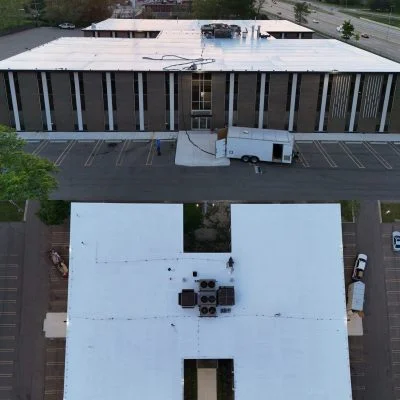
A seamless membrane is spray-applied across the entire roof surface. Every seam, penetration, and detail is sealed as part of one continuous layer, which is what separates a coating system from a traditional patch repair. There is no seam for water to find later, because there is no seam at all. Cure time varies by material: polyurea cures in seconds to minutes, where silicone can take hours.
Quality inspection
Every square foot is checked for coverage, thickness, and sealed penetrations before the job is considered complete. A restoration that is inconsistent in thickness wears unevenly and fails early in the thin spots.
Documentation and walkthrough
A finished restoration should come with documentation: what was done, what materials were used, and the expected service life. This matters for warranty purposes and for insurance records if storm or weather damage becomes a factor later.
When the project follows hail or wind damage, see our storm damage roof restoration process for inspection and documentation considerations.
Which coating material to restore with
Not all restoration coatings perform the same way. For the full technical comparison, see our polyurea vs. silicone breakdown, but the short version is this: polyurea cures faster, tolerates ponding water and impact better, and stretches further before failing, while silicone can be a lower-cost option for roofs facing mainly UV exposure without mechanical stress.
For a commercial or industrial building that cannot afford extended downtime, cure time alone often decides the material. A roof that returns to service the same day keeps a warehouse or plant running through the project. Reflective coatings also carry an energy angle: the U.S. Department of Energy notes that reflective "cool roof" surfaces lower rooftop temperatures and can reduce building cooling costs, and may extend roof service life by reducing thermal stress.
Why restoration beats replacement in most cases
Full replacement makes sense when the roof deck itself is compromised. When it is not, restoration wins on nearly every practical measure: less disruption to operations, lower material and labor cost, and no landfill waste from tearing off a roof that did not need to come out. Restoration typically saves 40 to 60 percent versus a full tear-off while keeping the building operational throughout.
Frequently asked questions
How long does commercial roof restoration take?
Most restoration projects finish in days rather than weeks, because the process does not involve removing the existing roof. Fast-curing systems like polyurea let a facility return to service the same day.
Is roof restoration cheaper than replacement?
Typically yes. Restoration usually costs 40 to 60 percent less than a full tear-off and replacement, though the exact savings depend on roof size, condition, and material.
How long does a restored roof last?
A properly applied polyurea restoration lasts 15 to 20 or more years, and can be renewed with periodic recoats to extend service life further.
Can any commercial roof be restored?
Only if the deck is structurally sound. A contractor should inspect the deck and insulation before recommending restoration over replacement.
Getting a restoration plan
For the underlying coating system, see our commercial polyurea roof coating overview. Building owners in Southeast Michigan can also see our Michigan commercial roof coating guide for freeze-thaw and snow-load specifics.
AZ Coatings inspects commercial and industrial flat roofs and gives a clear recommendation on restoration versus replacement before any work begins. Request a free roof inspection for a straight answer on which option fits your building.
Request a free roof inspection