
A hailstorm moves through, and the phone rings. Tenants report leaks. Your insurance carrier schedules an adjuster. Before that meeting, it helps to know what they are actually looking for when they walk your roof.
Here is the inspection process from the contractor's side, so you can go into the claim with clear expectations.
The Adjuster's First Pass: Marking the Hail Hits
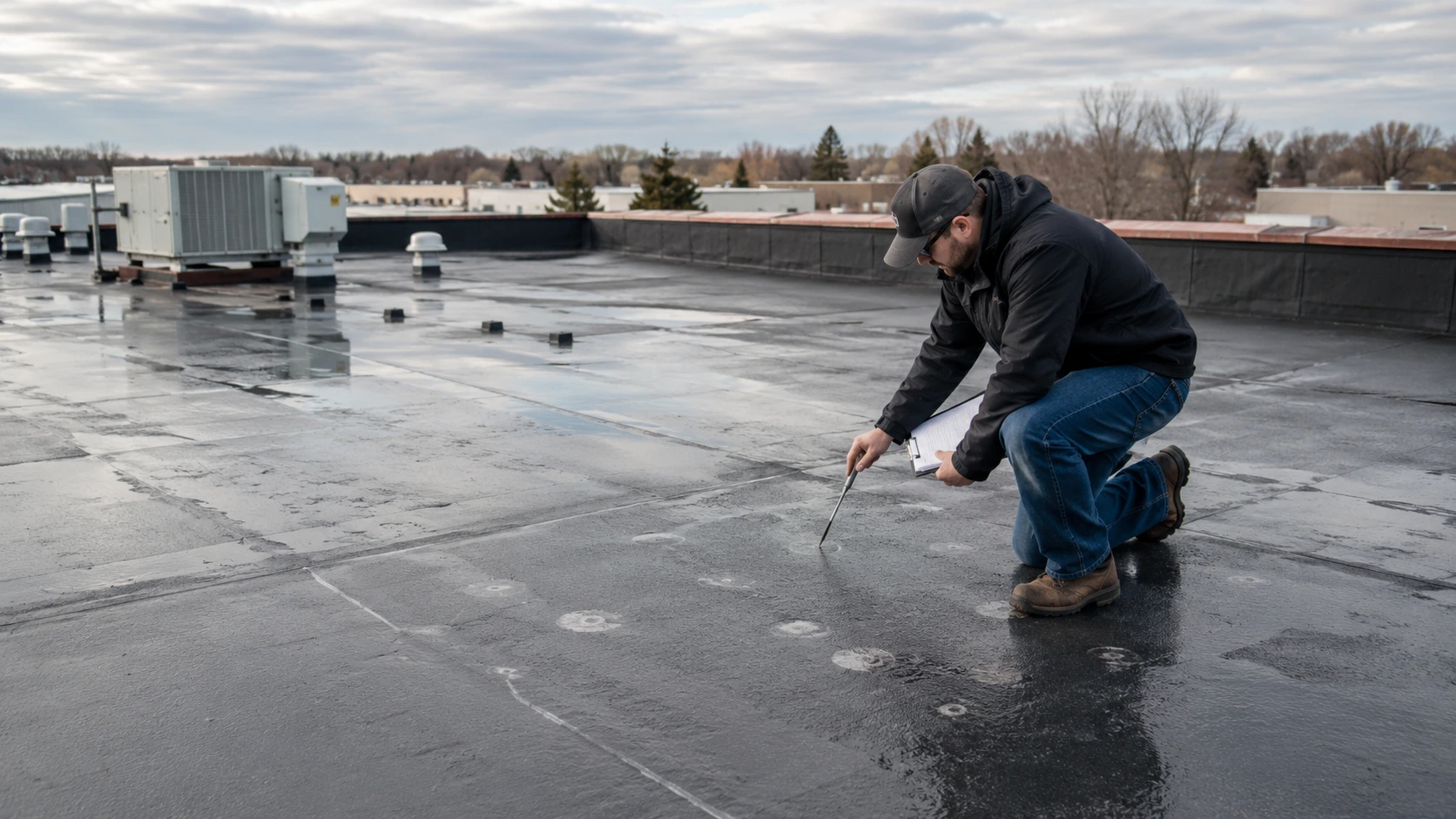
The adjuster starts with a visual sweep of the roof surface. On a flat commercial roof, they are looking for impact marks where hail hit the membrane. These show up as small dents, tears, or bright spots where the top layer of the granule or coating was knocked off.
They are not looking for one or two hits. They are looking for a pattern. A hail claim typically needs multiple impacts across a defined area, not a single isolated mark. The adjuster will mark these spots with chalk or a grease pencil to document the extent of the damage.
This first pass is about identifying the affected zones. It is quick, but it sets the direction for everything that follows.
Probing for Soft Spots and Hidden Tears
The visual pass only tells part of the story. Hail damage on a commercial roof is often not obvious from the surface. The impact can bruise the membrane underneath, creating a weak point that fails months later.
A good adjuster will probe the marked areas. They use a small tool, often a blunt screwdriver or a specialized probe, to press on the suspected hits. If the membrane is soft or gives way, that is a sign the impact compromised the substrate below.
This is where a lot of damage gets found. A tear you can see is easy to spot. A bruise you can only feel takes a closer look.
Checking the Flashings and Penetrations
Hail rarely falls straight down. Wind-driven hail hits at an angle, which means the vertical surfaces take the worst of it. The adjuster checks the flashings along the parapet walls, the metal counter-flashings, and the edges where the roof meets any vertical surface.
They also look at penetrations. That means vents, drains, HVAC curbs, and any pipe that pokes through the roof deck. The sealant around these points is vulnerable. A direct hit can crack or dislodge it, opening a path for water even if the main field of the roof looks fine.
Do not be surprised if the adjuster spends a lot of time on these areas. They are the most common source of hidden leaks after a storm.
The Documentation and the Report
The adjuster photographs everything. They take wide shots to show the overall roof condition and close-ups of each marked impact. They measure the size of the damage and note the type of roofing material. This all goes into the claim file.
Their report will mention the extent of the damage, whether it meets the threshold for a claim, and what the likely scope of repair or replacement is. The report is what your carrier uses to write the check or deny the claim.
How to Prepare for the Adjuster's Visit
You do not need to do much, but a few things help. Make sure the roof access is clear. If you have had any previous repairs, have the documentation ready. It helps the adjuster distinguish new hail damage from old wear.
Most importantly, do not attempt to patch the roof yourself before the inspection. The adjuster needs to see the damage in its original state. If you cover it up, you make their job harder and you risk a denial on a valid claim.
If you are unsure about the condition of your roof after a storm, it is worth having a contractor walk it with you. We do this all the time after a storm. We can point out the same signs an adjuster looks for, so you know what to expect, and we can be there for the adjuster's visit as your representative.
A hail claim is a process. Knowing what the adjuster does with their time on your roof gives you a better shot at a fair result.
If you are dealing with a storm-damaged roof in Michigan, get in touch. We will do an honest assessment and help you get ready for the insurance conversation. If the membrane is still structurally viable, our storm damage roof restoration process may avoid a full tear-off.
Common questions
What does a hail claim adjuster look for on a commercial roof?
They look for a pattern of impact marks from hail, bruising or soft spots in the membrane, and damage to flashings and roof penetrations. They document everything with photos and measurements for the claim report.
Should I repair my roof before the adjuster comes?
No. The adjuster needs to see the damage in its original state. Patching the roof before the inspection can lead to a claim denial.
What is the best way to prepare for a hail damage roof inspection?
Clear roof access and have documentation of any previous repairs ready. It also helps to walk the roof with a contractor beforehand so you know what to expect.