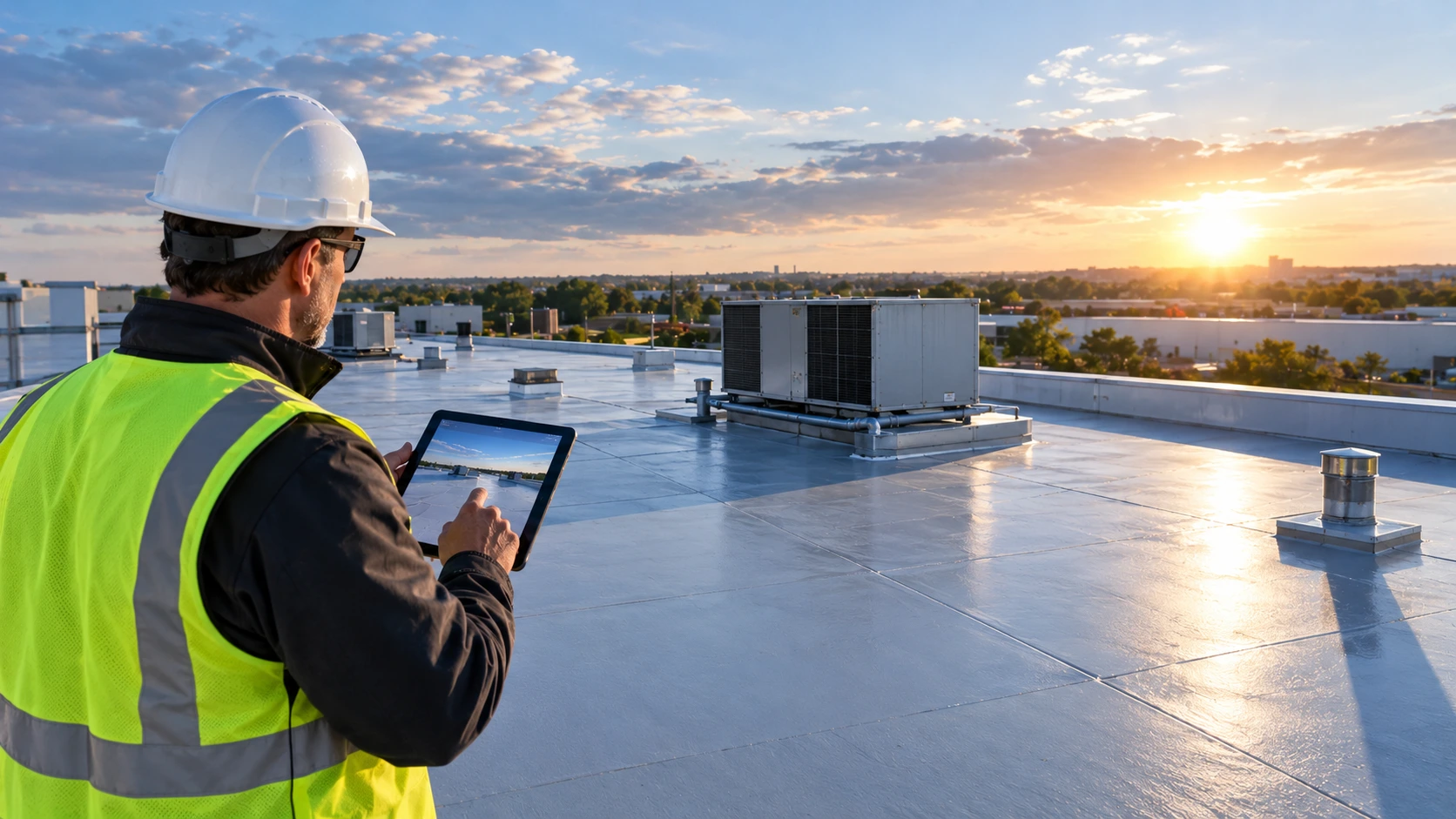
A coating decision made before water is coming through the ceiling is different from one made during a leak. Ahead of the problem, you have time to inspect, plan, and compare. Once a roof is leaking, the schedule picks itself. The checklist below is the order that works.
Start With the Roof's Actual Condition
Get on the roof, or get someone on it, and look at what is there. Coating is a surface treatment. It covers the membrane, and it does not fix the structure under it.
Things that stop a coating:
- Saturated insulation. Water held in the assembly has nowhere to go once a coating seals the top.
- Active leaks. Find where water is entering before you cover anything.
- Blistered, split, or open seams.
- Rusted or corroded metal, or fastener backs that have worked loose.
- Ponding that sits for days after rain.
A roof listing toward the end of its service life may still be a candidate. The assembly has to be sound enough to carry the new layer.
Preparation Decides the Outcome
Most coating failures are adhesion failures, and adhesion is decided before the first gallon goes down.
The roof gets cleaned. Dirt, chalk, and debris keep the coating from bonding. Ponding areas and low spots get attention. Loose granules, failed sealant, and old patches come off. Seams and fasteners get repaired first, then the coating goes over a surface that is ready to receive it. Moisture in the assembly needs to be dry before it gets sealed in.
A crew that skips or shortens this step is selling you a product, not a system. Ask what the surface preparation includes and how they check moisture.
Does the Coating Fit This Roof
Coatings are not interchangeable. What works on one membrane may not bond to another, and roof slope and sun exposure matter.
Silicone coatings resist ponding water and hold up to UV. Acrylics are economical in moderate climates but do not tolerate standing water. Polyurethane and polyurea systems bring specific properties of their own.
Ask which product, and why that product for this roof. Get the answer in writing, including the membrane the coating is going on and the conditions it is built for. If the manufacturer publishes a system for your membrane and climate, that is a place to start.
What a Quote Should Cover
Price alone tells you almost nothing. A quote you can actually compare shows:
- The scope of work, in plain language.
- Surface preparation and repair items, called out separately.
- The coating product and how much of it.
- The schedule and who is on site.
- Whether any work is excluded.
If two quotes come back with wildly different numbers, the scopes are probably not the same job. Compare the line items, not the totals. Credentials differ between bids too. Here is what SPFA certification on a roof coating bid means.
Warranty and Who Stands Behind It
Warranties split into two parts: what the manufacturer offers on the product, and what the contractor offers on the labor. Read both.
Ask who performs repairs during the warranty period, whether the warranty is transferable if you sell the building, and what maintenance it requires to stay valid. A warranty that requires annual inspection and records can be voided by neglect.
Before signing, confirm licensing and insurance. Fall protection on a commercial roof is not optional, and it is a fair question to ask how a crew handles it.
The Short Answer
Coating a roof before it leaks is a reasonable move when the roof is structurally sound, dry, clean, and a good match for the product. It is the wrong move when the assembly is saturated or the deck is failing, because you will seal in a problem you still have to fix. The inspection tells you which situation you are in. Do that before you ask for a price.
Common questions
Should I coat a commercial roof before it leaks or wait until it fails?
Coating before leaks start is reasonable when the roof is structurally sound, dry, and clean. Once insulation is saturated or the deck is failing, a coating seals water in and does not solve the real problem. Inspection comes first either way.
What preparation does a roof coating need?
Clean the surface, remove debris and failed sealant, repair seams and fasteners, and confirm the assembly is dry. Most coating failures are adhesion failures, and adhesion is set before the coating goes down.
How do I compare roof coating quotes?
Compare scope, surface prep, repair items, the coating product and quantity, scheduling, and exclusions. Two very different totals usually mean the jobs are not the same scope.
What should I check in a roof coating warranty?
Check the manufacturer's product warranty and the contractor's labor warranty separately. Ask who performs repairs, whether it transfers on sale, and what maintenance keeps it valid.