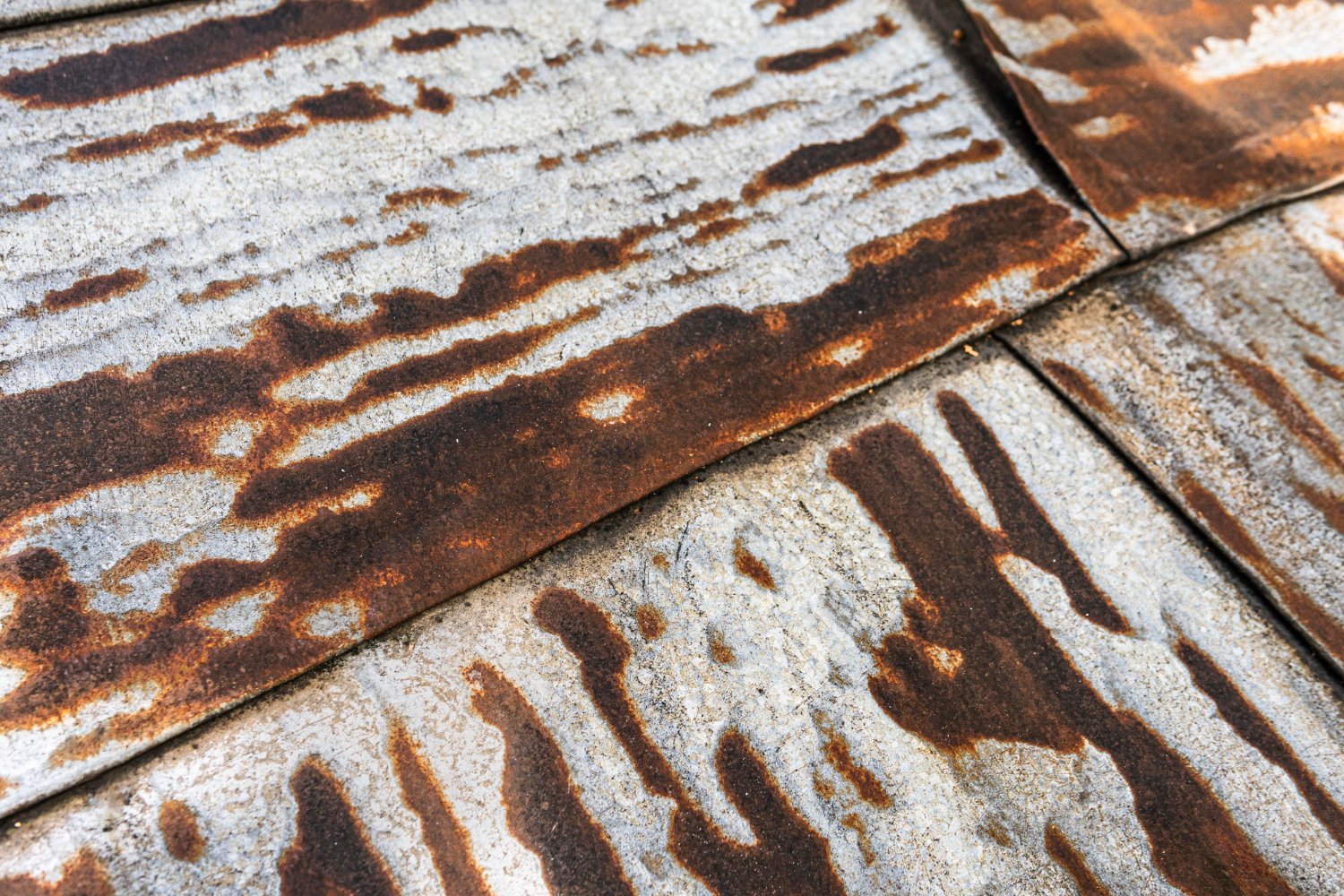
A rusted metal roof can sometimes be coated. Sometimes it cannot. The answer depends on how far the rust has gone and what condition the seams and fasteners are in. Coating is a surface treatment. It does not add structure. If the metal has lost section thickness or the fasteners no longer hold, a coating will not fix that. This checklist helps you sort your roof into one pile or the other before you sign a bid.
Start With How Much Metal Is Gone
Surface rust is a stain. It sits on the panel and wipes off as powder. Section loss is different. The metal has thinned. Probe it. A screwdriver or a scraper will tell you more than a photo. If the tip sinks in easily or the panel flexes under a boot, that area has lost section. Coating over thin metal hides the problem for one season and then fails.
Look for rust that has gone through. Pinholes, daylight, water stains on the deck below, and rust trails at the panel lap point to perforation. A coating cannot close a hole with structural strength. Patch and replace first, or plan replacement.
Check the Seams
Standing seams, lap seams and end laps are where metal roofs fail first. Run a hand along each seam. Look for lifted laps, failed sealant, rust bleeding from under the seam, and fastener back-out. An open seam is a water path, not a coating candidate. Rust under a lap means water has been sitting there. Coating the top will not stop it.
On a through-fastened roof, check every screw line. On a standing seam roof, check the seam caps and the panel edges at the eaves and ridges.
Check the Fasteners
Fasteners are the roof's grip on the building. Rusted screw heads are common and usually cosmetic. Rusted shanks are not. Back a few screws out. If the shank is rusted through or the threads are gone, the panel is loose. Loose panels move. Coating cracks over movement.
Also check the neoprene washers. Hard, cracked or missing washers mean water is entering at every screw. A coating crew can replace washers as part of prep. Ask whether that is in the bid.
Look at the Substrate and Deck
A metal roof sits on purlins or a deck. Rusted panels often sit over rusted purlins. Look in the attic or from below if you can. Sagging panels or rusted purlins mean the structure is compromised. Coating does not fix structure.
Check for ponding. Water that stands on a metal roof after rain will find every seam. Ponding is a drainage problem, not a coating problem.
Rust Comes From Somewhere
Find the source before you cover the symptom. Common sources on metal roofs include:
- Fastener back-out that lets water in at the screw line
- Failed sealant at seams and penetrations
- Clogged gutters and downspouts that back water up under the eave
- Condensation on the underside of the panel
- Exhaust or chemical discharge from inside the building
If the source is still active, coating will fail the same way the metal did.
Prep Is the Whole Job
Coating a rusted roof without prep is a waste of money. The surface has to be cleaned, rust has to be removed or treated, and the profile has to be right for the coating. The coating maker's written instructions control this. Ask for the product data sheet and the surface preparation section. If the bid does not mention prep, the bid is incomplete.
The National Roofing Contractors Association publishes guidance on roof system selection and repair. The International Code Council publishes the building codes your roof must meet. For coatings, the manufacturer's approval is the document that matters.
When Coating Is a Poor Candidate
A metal roof is a poor coating candidate when any of these are true:
- Rust has thinned the panel or gone through it
- Seams have opened or rust is active under the laps
- Fasteners are rusted through or the panels are loose
- The purlins or deck are rusted or sagging
- Water ponds on the roof after rain
- The rust source has not been found or fixed
- The coating maker's prep requirements cannot be met on this roof
In these cases, coating is a patch on a structural problem. Plan repair or replacement.
When Coating Can Make Sense
Coating can make sense when the rust is surface only, the seams and fasteners are sound, the deck is dry and stable, and the coating manufacturer approves the surface prep for the product. The roof should also have useful life left. A coating on a roof at the end of its service life buys time, not a new roof.
Your flat roof coating candidate review should start with these checks. For a broader look at when coating beats replacement, see restoration vs replacement. If your roof is nearing the end of its service life, the 40-year flat roof article explains what restoration can and cannot do.
Questions to Ask the Coating Contractor
Before you sign, get answers in writing:
- What product and what surface preparation does the maker require for rusted metal?
- How will you find and treat rust under seams and at fasteners?
- Are washer and fastener replacements in the bid?
- What is the warranty, and what does it exclude?
- What happens if the coating fails at a seam?
If the contractor cannot name the product and the prep, walk away.
Safety and Access
Metal roof work is fall-risk work. OSHA fall protection standards apply to employers and the workers they send onto the roof. Stay off the roof if you are not trained and equipped. Ask the contractor how they handle fall protection.
What to Do Next
Get the roof inspected by someone who can tell surface rust from section loss. Get a written scope that names the product, the prep and the exclusion list. Compare that scope to a replacement quote so you know what you are buying. A coating is the right call when the metal is sound and the prep is done right. It is the wrong call when the metal is not sound.
Common questions
Can you coat a metal roof that has rust?
Sometimes. Coating can work when the rust is on the surface and the seams, fasteners and deck are sound. If rust has thinned the panel or gone through it, a coating will not fix the metal.
How do I know if my metal roof needs replacement instead of coating?
Look for rust that has gone through, opened seams, rusted-through fasteners, loose panels, rusted purlins or ponding water. Any of those point to repair or replacement, not coating.
Does a coating stop rust on a metal roof?
A coating covers the surface. It does not stop rust that is still active under seams or at fasteners. The source of the water has to be found and fixed first.
What should a coating bid include for a rusted metal roof?
It should name the product and the manufacturer's surface preparation requirements, describe how rust and fasteners will be handled, and list warranty exclusions.