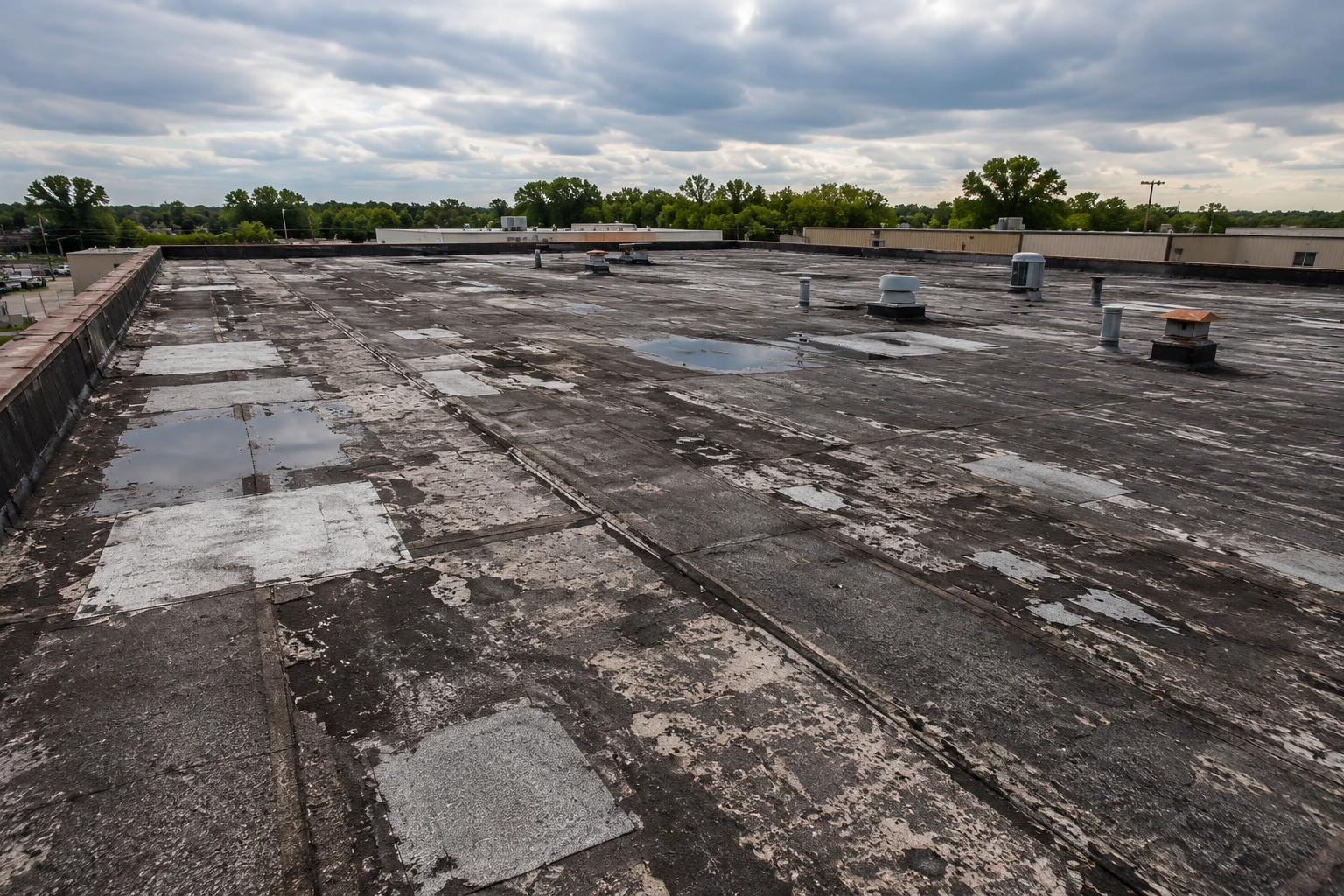
A 40-year-old flat roof is not a candidate for coating. It is a candidate for replacement. That is the honest line this industry does not always draw clearly.
Most commercial roof systems simply do not last that long. A well-maintained built-up roof (BUR) or modified bitumen roof carries a realistic service life of 20 to 30 years, with the NRCA putting conventional expectations at the lower half of that range. Spray polyurethane foam (SPF) roofs can exceed that with diligent maintenance, but 40 years is exceptional for any system. By that age, the substrate is usually compromised, and an insulation layer soaked with years of moisture cannot be dried out from above.
What Restoration Can Do
Coating a flat roof is a legitimate strategy, but only on the right substrate. A restoration system seals surface cracks, restores reflectivity, and can add meaningful service life to a roof that is otherwise sound. Silicone and polyurethane coatings do this well. The key is what sits underneath.
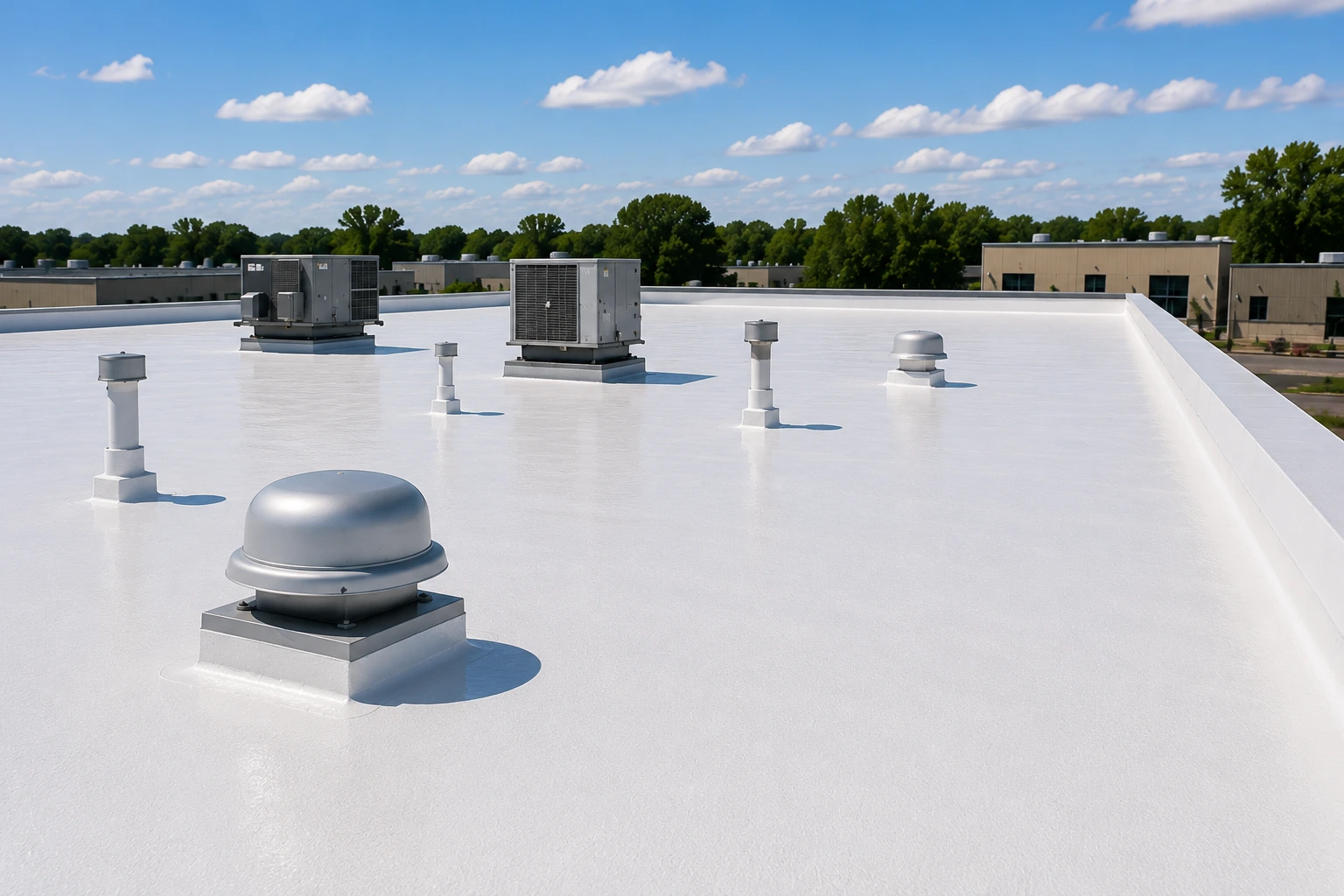
A coating is a membrane, not a structural repair. If the original membrane is intact, the seams are sealed, and the insulation is dry, a restoration can be a strong financial decision. It is faster than replacement, creates less operational disruption, and avoids the cost of tearing off and hauling away layers of old material. For a roof that is mid-life with no history of chronic leaks, restoration is often the right call. This is the scenario we cover in how to restore a commercial flat roof.
A flat roof coating candidate needs to pass a simple test: the substrate must be sound. That means no ponding water for 48 hours after a rain, no widespread blistering, and no delamination between existing plies or foam.
Why a 40-Year-Old Roof Fails the Test
The physics of an old roof work against you. Polyurethane foam and built-up systems absorb moisture over time. Once the insulation is wet, it loses its R-value permanently. FM Global guidance on roof recovery systems supports the practical point: you cannot lay a new membrane over a substrate you cannot dry. The result is hidden rot, corroded decking, and a thermal envelope that performs far below the rating on paper.
The other reason coatings fall short on old roofs is adhesion. A coating only protects what it sticks to. Peeling paint, decomposed felt, and oxidized asphalt are not surfaces that will take a high-performance coating. A contractor who tells you a coating will solve a 40-year-old roof is selling a temporary patch, not a restoration. The restoration vs. replacement decision comes down to this hard line.
How the Clock Actually Runs
Commercial roof systems have a lifespan that varies by type. A standard BUR or modified bitumen roof performs for 10 to 20 years. A single-ply membrane like PVC or TPO, if installed correctly, will carry 20 years. SPF systems with proper coatings are the industry workhorse for longevity, routinely performing past 30 years. Sika and Carlisle's technical data describe SPF systems designed for decades of service life.
If your roof is pushing 30 years, it is not a candidate for re-coating. The substrate has likely weathered beyond the point of adhesion, and you are chasing leaks that will migrate along the decking rather than show at the source.
What Past the Point of No Return Looks Like
You are past the point of no return when you see these signs:
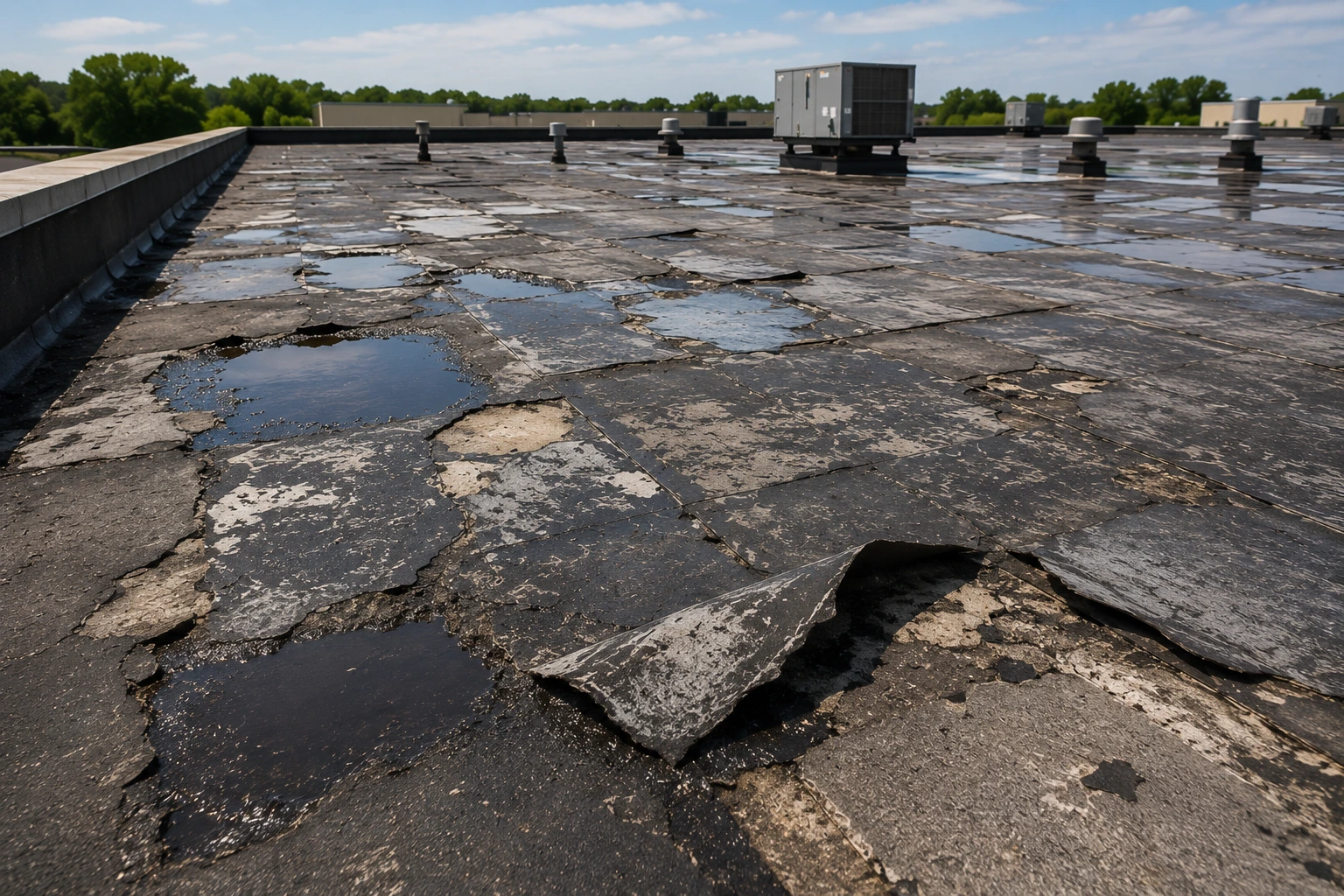
- Wet insulation that squishes underfoot
- Corroded metal decking visible from the ceiling below
- Blisters larger than a dinner plate on the roof surface
- A history of patch-on-patch repairs in the same 10-foot radius
At that stage, coating is throwing money away. The membrane is gone, the substrate is failing, and a coating cannot restore structural integrity. The only honest answer is tear-off and replacement.
The economics shift dramatically with the building's use. A cold storage facility cannot tolerate a failed thermal envelope. A commercial warehouse with a simple sloped roof might have different tolerance, but the building owner still faces the same endgame when the deck rots.
What a 40-Year-Old Roof Costs
We do not quote prices here, and neither should you trust anyone who quotes a restoration price over the phone. The cost of replacement depends on square footage, deck type, insulation requirements, and how many layers of old roof have to be torn off and removed. Restoration does not always win on paper.
For a roof that is 10 years old with a small leak, restoration can double its remaining life at a fraction of the replacement cost. For a 40-year-old roof, restoration is a down payment on a bill that gets bigger the longer you wait. The deck continues to corrode, the insulation continues to absorb, and what could have been a four-layer teardown becomes a structural repair.
If you are in Michigan or Florida and have questions about your specific roof, contact our team for an assessment. We will tell you honestly which path your roof is on.
Weighing the Decision
In practical terms, ask yourself these questions:
- What is the roof's age and original system type?
- Are there active leaks, and how long have they been ongoing?
- Has anyone been inside the building to check for wet insulation and corroded decking?
- What is the remaining service life of the building itself?
If the roof is under 20 years old and structurally sound, restoration is a viable, high-value option. If the roof is over 30 years old, assume replacement. It is the only answer that stops the cycle of leaks, and it is the only answer that guarantees the warranty you are paying for. The same logic applies in southeast Florida and Michigan alike.
A 40-year-old flat roof is an asset that has reached the end of its road. Restoration cannot bring it back. Replacement gives you the full projected service life on a clean slate, and that is what an honest contractor tells you when it is time.
Common questions
How long does a flat commercial roof last?
Most flat roof systems last between 10 and 30 years. A well-maintained SPF roof can exceed 30 years, but 40 years is exceptional for any system.
Can a 40-year-old flat roof be restored instead of replaced?
No. At 40 years, the substrate is usually compromised and the insulation soaked with moisture. Coatings cannot dry wet insulation or restore a rotting deck. Replacement is the honest recommendation.
What are the signs a flat roof is past the point of no return?
Wet insulation that squishes underfoot, corroded metal decking visible from below, large blisters, and a history of patch-on-patch repairs in one area indicate replacement is needed.